Stay for a transition
A room can look wonderful when it is empty. The more revealing moment may be when several children need help at once, play is being put away, or everybody is getting ready to go outside. If the provider allows it, arrange a visit during a normal session rather than relying entirely on an evening tour.
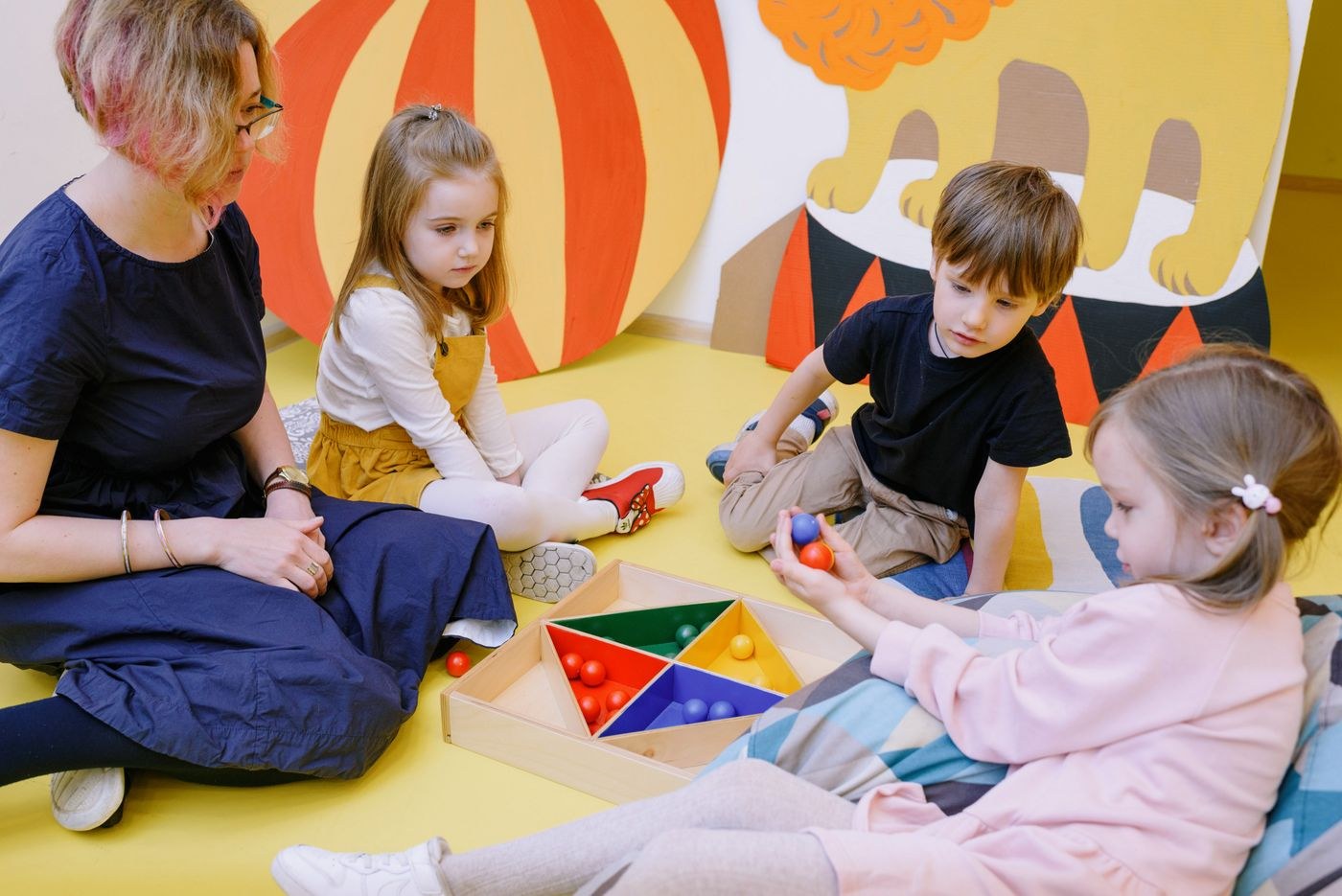
Watch how an adult approaches a child who has not joined the activity. Do they get down to the child's level? Is there room to watch before participating? Notice whether children can reach the materials they use and whether the adults seem to know their particular ways of communicating. These observations will not tell you everything, but they give you something concrete to discuss.
A quiet room is not automatically a good room, and a noisy one is not automatically a poor one. Listen for the quality of the exchanges. A group building a tower may be loud and absorbed; a child repeatedly asking for help without a response raises a different question. Ask what you have seen rather than guessing at its cause.
Put your child into the picture
Explain the parts of your child's day that matter to the arrangement. Perhaps they need time to eat, use a home language the staff do not speak, or find a large arrival group difficult. Ask how the setting would handle each situation. “What happens if she cannot explain that she needs the toilet?” is easier to answer than “Are you good with international children?”
Ask who would usually care for your child, how information reaches other staff, and what happens when that adult is absent. Find out how settling visits work and what contact you can expect during the first days. A promise that every child settles quickly is less useful than an explanation of what staff do when one does not.
The practical arrangement matters too. Confirm opening times, collection procedures, closures, fees, meals, and the process for reporting concerns. Check the registration or licensing arrangements with the relevant local authority, since the rules and available inspection information differ between places. A friendly visit does not replace those checks.
Compare observations while they are fresh
After leaving, write a few facts before talking yourself into a decision. Record what happened, what you asked, and anything still unanswered. If you visit another setting, use the same handful of questions so the newest tour does not crowd out the earlier one.
You might return to see a different part of the day or ask for clarification on a procedure. That is a reasonable part of choosing care. The aim is to understand the ordinary experience your child would have there, including the busy moments when the setting has less opportunity to present itself.