Begin with the journey between the doors
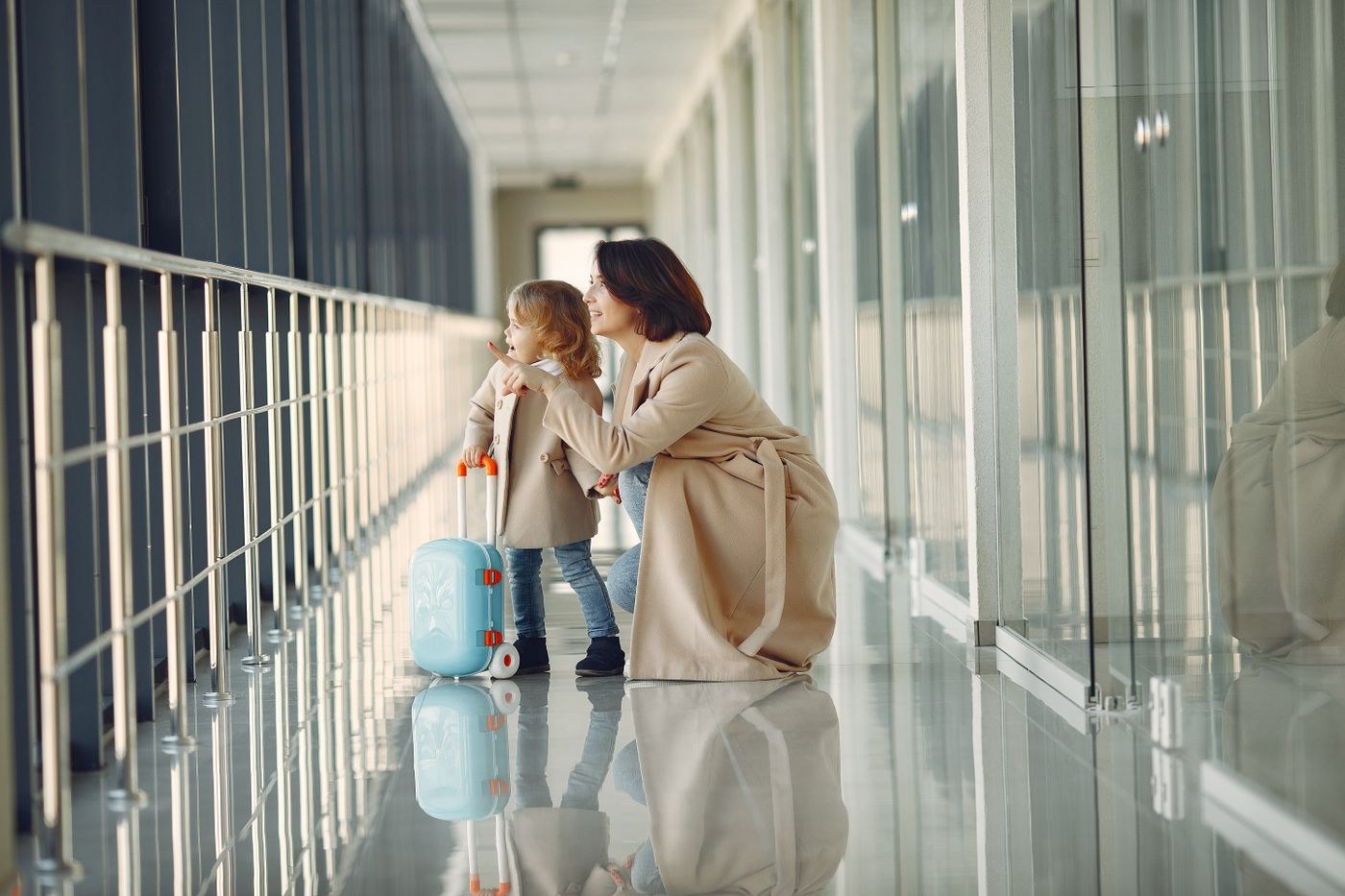
A cabin bag has to work before you reach the aircraft. Think through leaving home, waiting at the airport, security, boarding, the flight and the journey after landing. An item can earn its place by helping with one of those stages; it does not need to cover every imaginable problem.
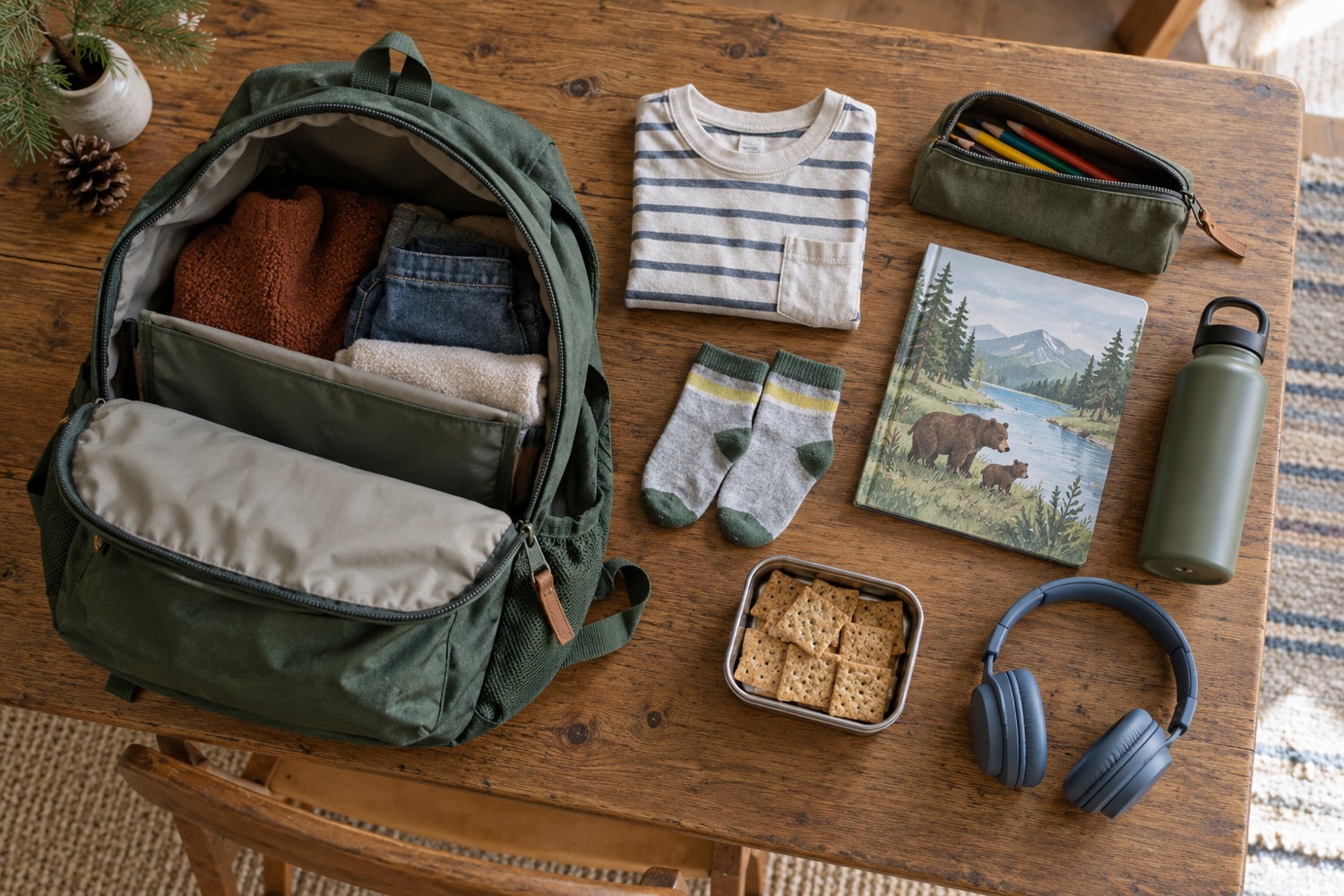
Keep travel documents and the items you need for immediate access in a secure, consistent place. Put spare clothing together so you can retrieve an outfit without unpacking half the bag. A small bag for used clothing helps separate it from the clean things until you reach somewhere to sort it out.
Give entertainment a limit based on what your child actually uses. A thin book, a drawing pad and a few contained activities may be easier to manage than a full bag of new toys. Check small parts for age suitability and avoid bringing something whose entire appeal depends on spreading pieces across a floor.
Separate access from quantity
Packing everything neatly is only half the job. Imagine reaching for a tissue while one hand is occupied. The most frequently used items belong where you can reach them without moving the documents or opening a pouch that will release several other things.
Try arranging the bag into a few recognisable groups rather than dozens of tiny organisers. One pouch for changing, one for quiet activities and one for charging equipment may be enough. Explain the system to another travelling adult so the bag does not depend on one person's memory.
Check the airline's current allowance for each traveller and each part of the booking. Do not assume a child's ticket includes the same baggage as an adult's, or that an item accepted on the outward flight will fit every connecting carrier's rules. Measure the packed bag, including its wheels or handles where the airline requires them to be included.
Check restricted items before closing the zip
Airport security rules, airline baggage conditions and destination import rules answer different questions. A food item that passes security may still be restricted at the border. Consult the relevant official information for your departure, connections and destination, especially for liquids, baby food, batteries and items you plan to carry for care needs.
If you need medication or essential care supplies, plan with the relevant professional and follow the applicable travel guidance. Keep the information you may be asked for accessible, without assuming a photograph of a document replaces an original. Leave time to clarify uncertain rules before the departure day.
Finally, lift the bag and walk with it. Add the coats, documents and child-related items you expect to carry at the same time. If the combination is unwieldy at home, it will not become easier in a boarding queue. Remove a low-value extra or move something to an allowed bag before you leave. A cabin bag should support the journey rather than become another person to look after.