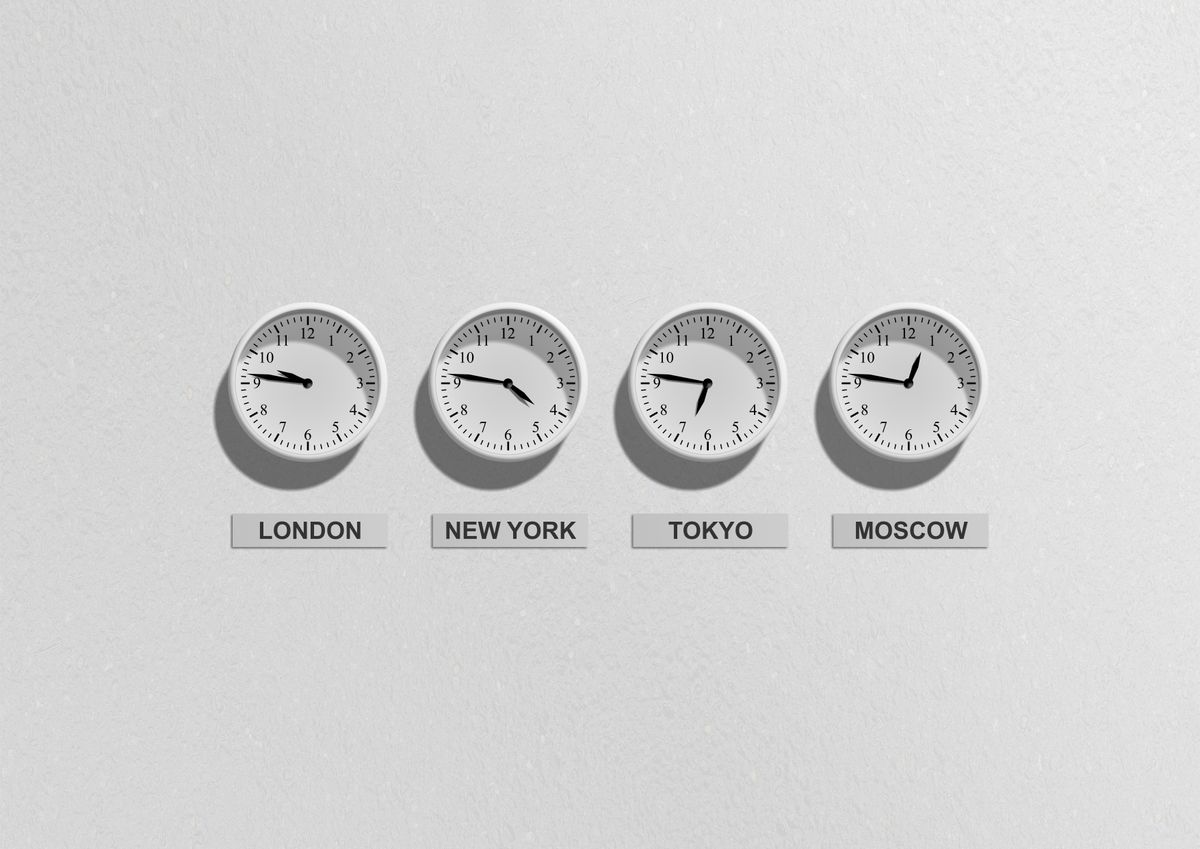
Use places, not a remembered number
It is easy to say that home is five hours behind and keep using that difference long after the clocks have changed. Time differences can vary during the year because places do not necessarily change their clocks on the same dates, or at all. When arranging a call, look up the time for the actual date and the relevant cities instead of relying on a remembered offset.
Most digital calendars let you assign an event a time zone or display a second one. Check the options in the calendar you already use. A world clock is useful for a call today, while a future appointment needs the date as well. If relatives live across a large country, their city matters more than the country name.
Put both sides in the invitation
When proposing a time, include the date and local time for both households in the message. “Sunday at six” is ambiguous if one person means morning or is already on another date. A sentence such as “Saturday evening for us, Saturday morning for you” can make a mistaken conversion easier to notice, but still give the actual times.
For a recurring call, decide which household's local time should stay fixed. A call built around a child's bedtime might remain at the same time in that child's home, with the other household adjusting seasonally. Check the calendar invitation rather than assuming the software has understood this intention.
Protect the time around the call
The moment when two adults are available may be awkward for children. A ten-minute conversation after breakfast might work better than a long call close to bedtime. Share likely constraints with relatives, including school departures and meals, so a missed call is less likely to be read as a lack of interest.
Keep a second method for occasions when live conversation is difficult: a voice message, a photograph with context, or a short video recorded at a convenient time. Avoid creating an expectation of an immediate reply simply because a message can arrive instantly.
Check the next shared date
Before birthdays, holidays or a planned family conversation, confirm the event in both calendars. A reminder sent the day before should still name the date and both times. If someone has travelled, confirm where they will actually be joining from.
You do not need to memorise the world's time zones. You need a repeatable habit that makes the next arrangement clear to the people taking part.