Choose a scale you can finish
A page about one weekend is a more manageable beginning than a book about an entire move. Put a few materials on the table and decide what this page will remember: the first library visit, a favourite bus ride, or an afternoon at home. The event does not need to be impressive enough for a holiday album.
Let children choose which details matter. They may keep a ticket because it was blue, remember the snack more clearly than the museum, or draw the neighbour's dog instead of the street. Those choices make the page theirs. An adult can add context without replacing the child's account with a polished travel story.
Use what is already available
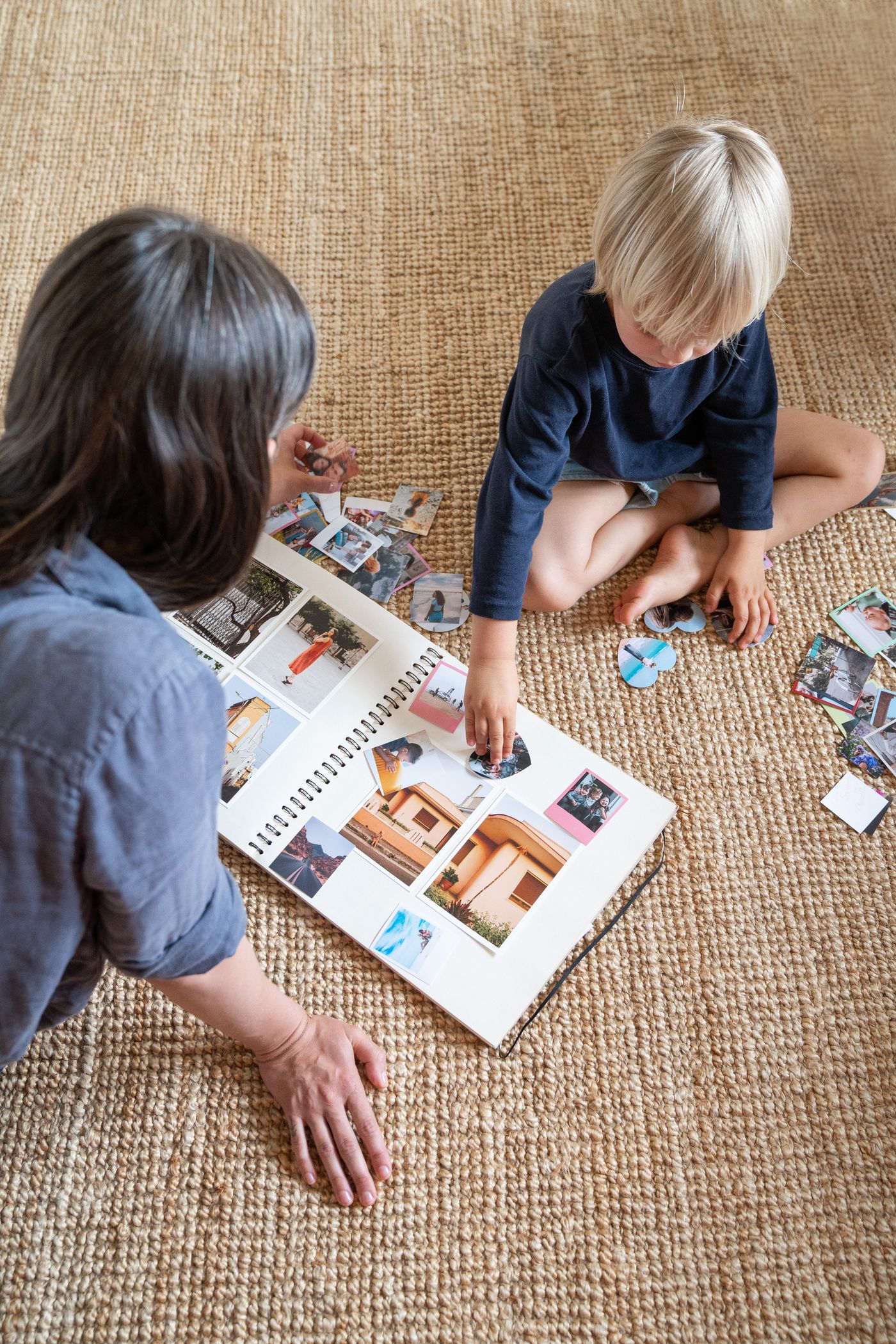
Photographs, drawings and small paper items can sit together. Check that anything saved is dry and clean, and avoid bulky objects that will damage the book or make pages difficult to turn. If an item cannot sensibly be kept, photograph it or draw it.
Protect private information before sticking documents into a book. Tickets and receipts can contain names, booking references or payment details. Cover or remove information that has no role in the memory, especially if the book may be photographed or shared.
Choose age-appropriate materials and supervise tools and small items as needed. A child does not need decorative equipment to make a page; paper, suitable glue and pencils may be enough. Keep the supplies together so that starting next time does not require a search through the house.
Add enough words for later
Write the date, place and a few names when they help explain the page. A young child can dictate a sentence. An older one may prefer a caption, a list or no text at all. Ask before correcting spelling in something they consider finished; you can add a separate note where accuracy matters.
Leave room for different memories of the same day. One person might remember rain, another a conversation and another the food. The scrapbook does not need to establish a single family version.
Put completed pages where they can be seen
Keep the book somewhere accessible rather than saving it only for special visitors. Children may return to a page when they want to tell someone about a place or person. Do not require them to explain every page on demand.
If the project pauses, it is still a record. A few finished pages are enough to preserve ordinary moments that would otherwise be lost among hundreds of phone photographs.