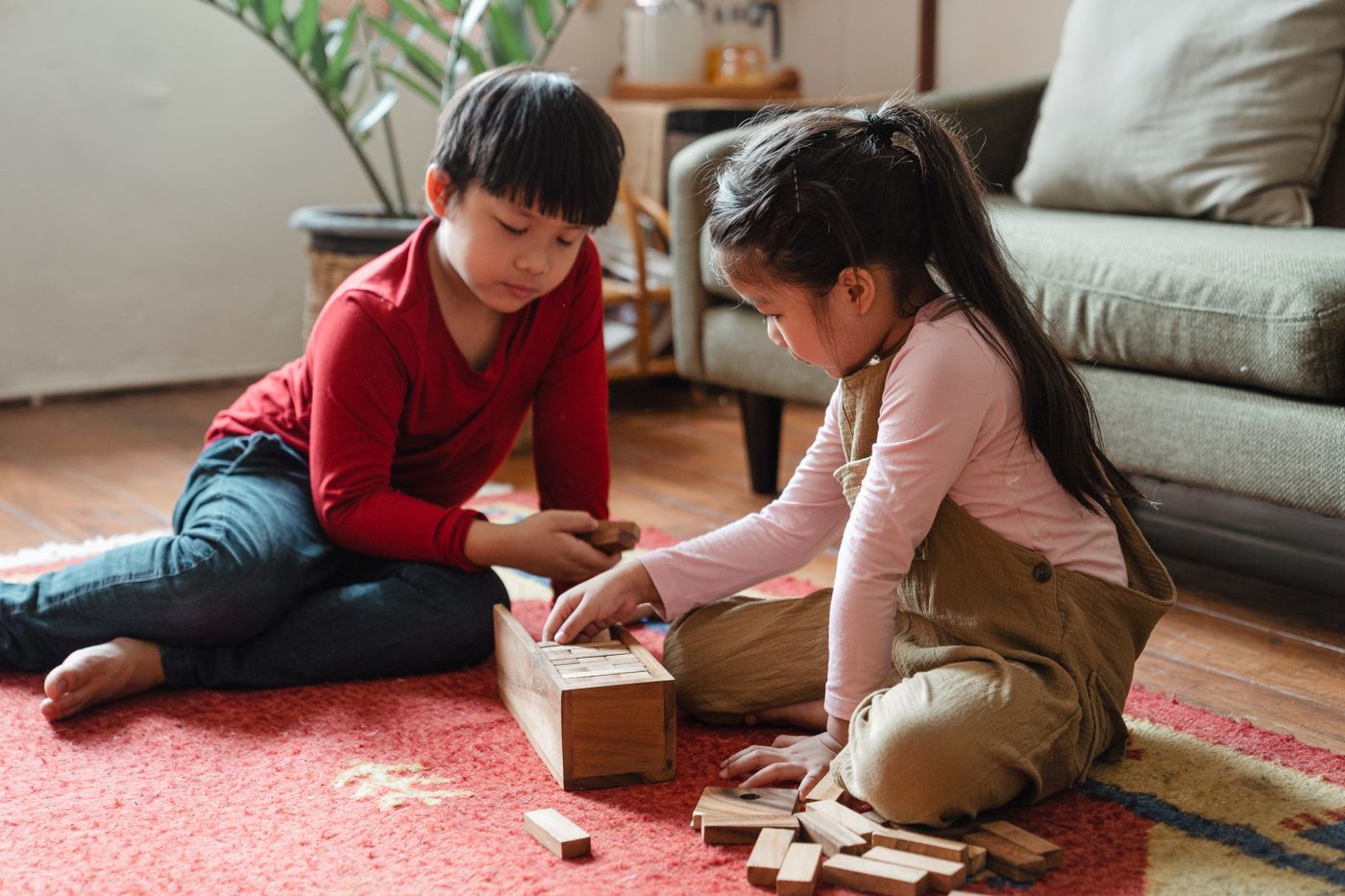
Start with something visible
Building blocks, drawing, rolling a ball or making a simple model can give children a shared activity before they share many words. Choose materials that allow more than one way to play. A game with a long verbal explanation may ask too much of a first meeting, while a familiar activity can make it easier to join in.
Show how something works rather than translating a set of instructions sentence by sentence. You can begin alongside the children, then step back when they have found a rhythm. Do not turn the playdate into a demonstration of whose language is improving fastest.
Agree the adult arrangements first
Before the meeting, exchange essential details directly with the other parent: timing, where adults will be, food requirements, and how to contact each other. Use written messages or adult language support if needed. Children should not be responsible for communicating an allergy, a pickup change or another consequential instruction.
Keep the first visit short enough that everyone can leave before exhaustion takes over. Offer a place for coats and belongings, and explain where the bathroom is. If the family is new to your home, ask about preferences rather than assuming they follow the same routines as you.
Help with the difficult moments
Small disagreements can be harder to untangle when children cannot explain what they meant. Describe the action you saw in simple language, let each child respond in the way they can, and show an immediate option such as taking turns or using separate materials. Avoid treating every conflict as a cultural misunderstanding.
Give children useful words if they want them: stop, my turn, help, or come here. Gestures can support these phrases, but check that the meaning is shared. An adult needs to remain available if a child is uncomfortable or cannot make an important need understood.
Allow quiet stretches. Children may watch for a while, play beside one another or move between activities. Adults do not need to narrate every minute to keep the meeting successful.
Afterwards, ask about a specific moment: which game they enjoyed or whether they would like to meet again. If they did not connect, you can try a different activity or a different friend another time. The purpose was an opportunity to spend time together, not proof that a language barrier has disappeared.