Prepare a route through the property
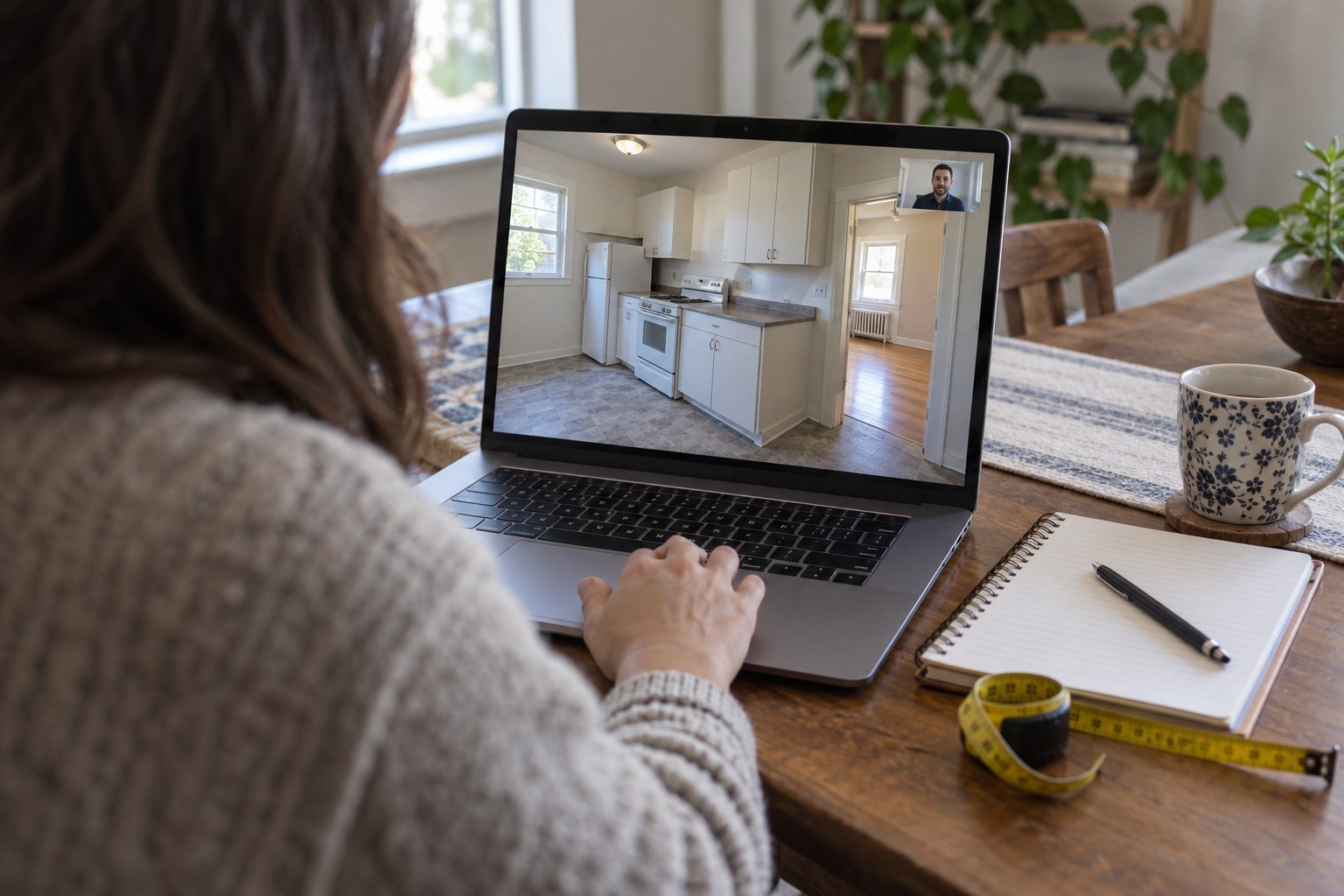
A remote viewing is more useful when it follows a plan. Ask the person showing the home to begin at the entrance and move through it in order. This helps you understand how the rooms connect, rather than receiving a sequence of attractive close-ups that could belong to almost any layout.
Before the call, write down the family's actual requirements. These might include a sleeping arrangement, space for a desk, somewhere to put a stroller, or access that works with your belongings. Keep the list short enough to consult during the conversation. Separate questions about the property from questions about the surrounding area so neither is forgotten.
Ask whether the viewing is live and whether the rooms shown are the exact property being considered. Note anything not available to see. If you want a recording, request permission first and agree who may use it; a live call does not automatically permit recording people or their possessions.
Look at the connections
Have the camera pause at doorways. Can you see the route from a child's sleeping space to the bathroom? Where does the dining area sit in relation to the kitchen? Are there steps that are not obvious in the photographs? Ask for measurements where size matters, and have the person show how they measured rather than relying on a wide-angle impression.
Use a few ordinary family situations to guide the camera. If an adult will work while a child sleeps, ask to see the distance and doors between those spaces. If two children will share, request the dimensions needed for their actual sleeping arrangements. If the main table must serve meals and homework, look at the space around it with chairs pulled out. These questions are easier to answer than “Is it suitable for a family?” and they avoid relying on a label with no shared definition.
You can also ask to see the view from seated height rather than only the sweeping shot from the doorway. That reveals how the space will feel when used. Do not infer a property's dimensions from the apparent size of a familiar object on the screen; lens distortion and perspective can be misleading.
Storage deserves a moment of its own. Ask to see inside the cupboards included with the property and clarify whether any are locked or reserved. A bedroom with a large wardrobe may still offer little usable space if most of it is not available to you.
Look at the entrance and building access as well as the rooms. A flat reached by several flights of stairs creates a different daily routine from one with a suitable lift. Ask how deliveries, rubbish and shared areas work. These details can affect family life more often than the view from the living-room window.
Ask for demonstrations and written answers
Where relevant, ask the person to demonstrate ordinary features: opening a window, operating blinds or showing where heating controls are located. Do not ask them to perform unsafe tests or interfere with equipment. Questions about an installation's condition should go through the appropriate inspection or qualified person.
Clarify what remains in the home at handover. Furniture, appliances, curtains and small kitchen items visible during a tour may belong to the current occupant. Request an inventory or other written confirmation appropriate to the arrangement.
Sound and light are difficult to assess on a single call. Ask which direction windows face, when the viewing is taking place and what the surrounding spaces are used for. If noise is a significant concern, arrange further checks rather than expecting a phone microphone to settle the question.
Keep the decision separate from the tour
After the call, write down confirmed facts, unanswered questions and your impressions as three different things. “The desk fits beside the window” needs a measurement; “the room felt bright” is an impression from a particular time of day. Both can matter, but they should not be confused.
Request follow-up images or information for anything that would change your decision. If possible, arrange a trusted local viewing or another appropriate independent check. A video tour can narrow uncertainty without replacing every check involved in renting a home.
Finally, verify the identity and authority of the person offering the property and use the proper process for the location. Read the terms before sending money or committing. An enjoyable viewing is useful information about the space, not proof that every part of the transaction has been established.