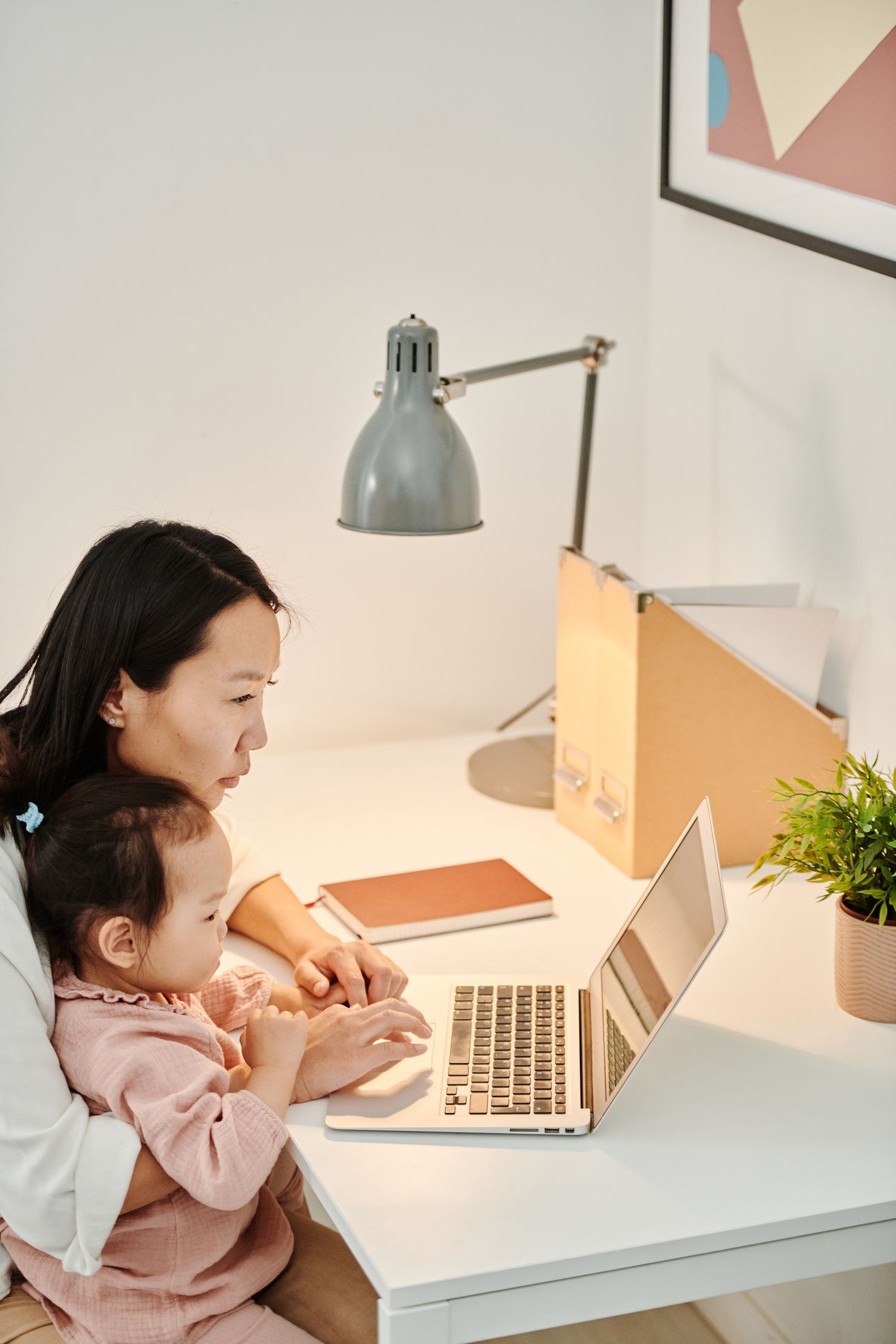
Choose the work surface first
A home workspace does not need to occupy a room permanently. It does need to support the tasks you intend to do there. Notice whether you mostly type, read papers, join calls or use equipment. A shallow shelf that holds a laptop may be enough for a brief task but awkward for a long session with several documents.
Try the arrangement before buying furniture. Check whether you can sit comfortably, see the screen without glare and reach what you use most. Keep walkways clear and place cables where they will not be pulled or tripped over. If children share the room, equipment and small accessories need a storage position they cannot accidentally disturb.
Pack by task, not by object type
A box or bag can hold the things that make a session possible: charger, headphones, notebook and the current papers. Keeping them together prevents the first fifteen minutes disappearing into a search through different cupboards. Leave unrelated stationery elsewhere so the box remains easy to lift and use.
Give unfinished work a defined place. A folder marked with the project name is easier to put away than several loose piles whose order only you understand. If other people use the table, agree where they can move the work and where they should leave it alone. Close or secure sensitive information before the surface becomes a shared space.
Make the ending repeatable
Leave a short note about the next action before packing up. “Open the draft and check the last two paragraphs” is a better restart cue than “finish report”. Save your files, disconnect what needs disconnecting and return the kit to its storage place.
If setting up and clearing away takes too long, remove something from the arrangement. A workspace that can disappear should not require a complicated reconstruction every morning. The goal is a place where you can begin a defined piece of work and then let the household use the space again.