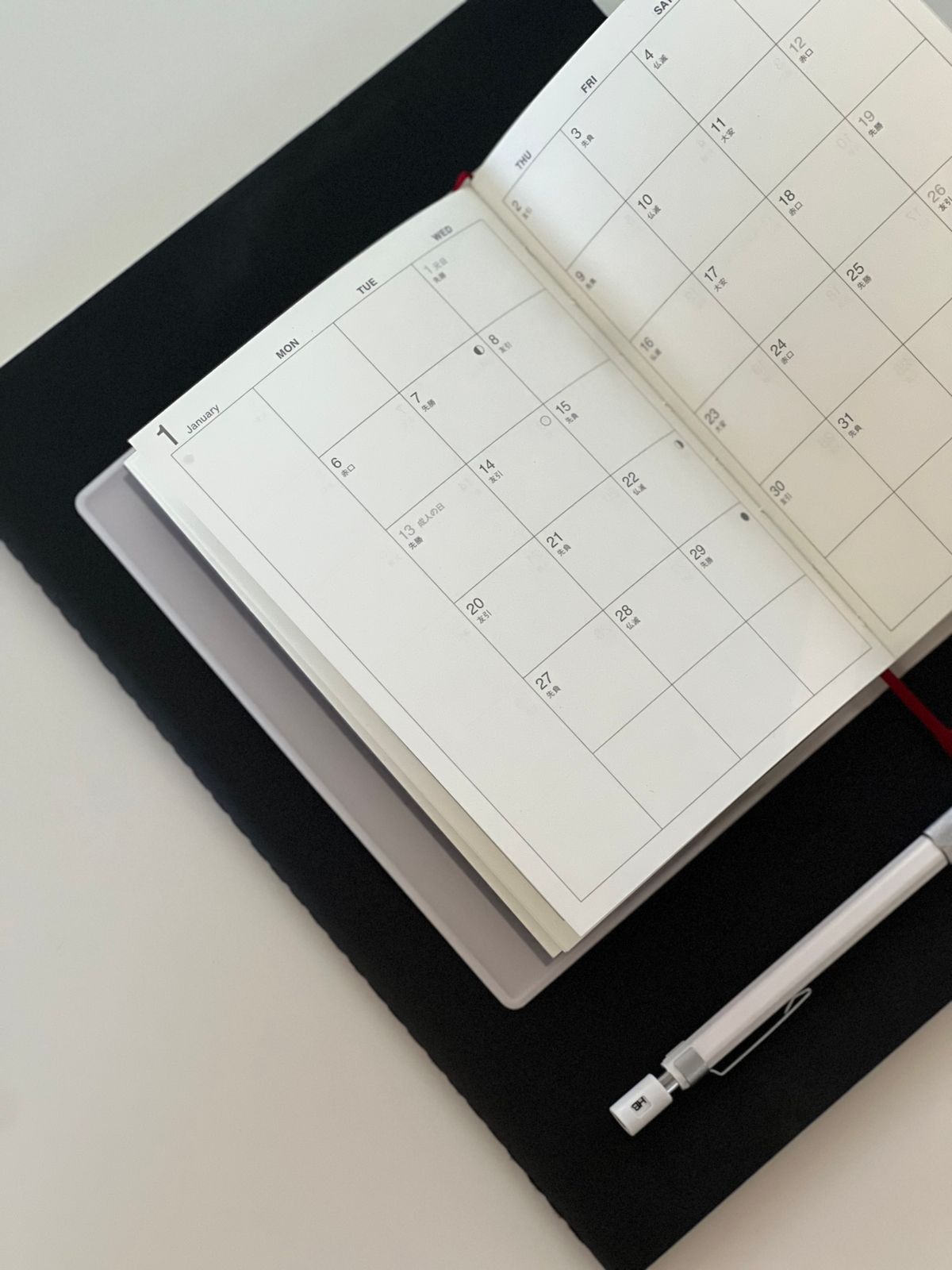
Put the fixed dates on one page
A shipping company may want a collection date before a school has confirmed a start date. A new employer may know the first working day while the accommodation remains undecided. Putting each separate plan into the same calendar makes those awkward gaps visible early.
Begin with dates that someone else controls. Include the last day in the current home, the first day a new place is available, work commitments, confirmed school dates and booked travel. Write unconfirmed dates in a different colour or mark them clearly as provisional. A hoped-for date should not quietly become the date around which everyone else makes promises.
Next, add the commitments that make those dates possible. Returning keys may require a cleaned, empty property. Packing a child's room may need to wait until a farewell sleepover has happened. Record the dependency in ordinary language: “Book collection after the address is confirmed.” This is more useful than a long list of tasks that appear equally urgent.
Give each person a lane
A child's timetable is not a smaller version of an adult's. School performances, a friend's birthday and the final session of a favourite club may matter far more to them than the arrival of a surveyor. Add these events alongside the administrative work rather than squeezing them into whatever space remains.
Adults need their existing responsibilities represented too. A parent who is finishing a work project cannot also provide unlimited packing hours because the family is moving. Mark care arrangements, work travel and regular appointments. The resulting calendar may look crowded, but it describes the capacity you actually have.
Where older children want involvement, ask them to identify one or two dates they would like protected. They do not need responsibility for resolving the whole schedule. Their contribution might simply show that the proposed packing day clashes with something worth keeping.
Work backwards, with room for an answer
Some tasks take ten minutes of your time and several days of somebody else's. Requesting a record, arranging a viewing or getting a quote belongs earlier than its apparent effort suggests. Give each request a follow-up date so waiting does not become forgetting.
Avoid filling every weekend with a major moving job. Reserve a few blocks for work that will be discovered later: another trip to a collection point, an item that does not fit, or a document that needs correcting. These are ordinary features of a move, not evidence that the plan failed.
Review the next two weeks in detail and the later months more loosely. When a date changes, move its dependent tasks together. A shorter, current calendar is easier to trust than a beautifully detailed one that everyone knows is wrong.
Consider a family whose current home must be empty on a Friday, whose flight leaves on Monday and whose new flat is available the following Wednesday. Those are three different transitions. The plan needs a place to sleep before the flight, accessible bags for those nights, and another arrangement at the destination. A single entry labelled “moving weekend” would hide all of that.
Now add a child finishing school on Thursday and an adult working through Friday. The packing appointment needs to fit those commitments, or another care and work arrangement needs to be made. Seeing the sequence early gives the family choices. Discovering it during the final week mainly gives them urgent purchases and hurried conversations.
Keep the calendar somewhere the adults responsible can both reach it. At the next review, the useful question is not “Are we on schedule?” but “What needs a decision before next week?”