Start with the morning after arrival
The suitcase that works for a holiday is not always the suitcase that works for a move. On holiday, most of the home you need is waiting when you return. After a move, the breakfast bowls, spare socks and familiar bedtime book may be in a shipment whose arrival date still feels optimistic. Pack a small working version of family life before filling the remaining space.
Imagine your first ordinary morning. Where will everyone sleep? Can you make breakfast, find clean clothes and leave the accommodation without opening every bag? Write down the objects that make those actions possible. This is a more useful starting point than asking which possessions you use most often, because some everyday things will already be supplied and others will be awkward to replace immediately.
Check what the accommodation actually provides. A photograph of a kitchen does not tell you whether there are pans, a tin opener or a place to dry clothes. A short message to the host can remove several unnecessary items from the packing list. Ask about the arrangements that affect your own family rather than requesting a complete inventory of the property.
Separate access from quantity
Some things belong in the bag you can reach during the journey; others only need to arrive with you. Keep the documents required for that particular journey accessible to the adult responsible for them. Put a change of clothes and the small items needed on arrival somewhere you can reach without unpacking a large case on the pavement. Check the carrier’s current luggage rules before assigning bags.
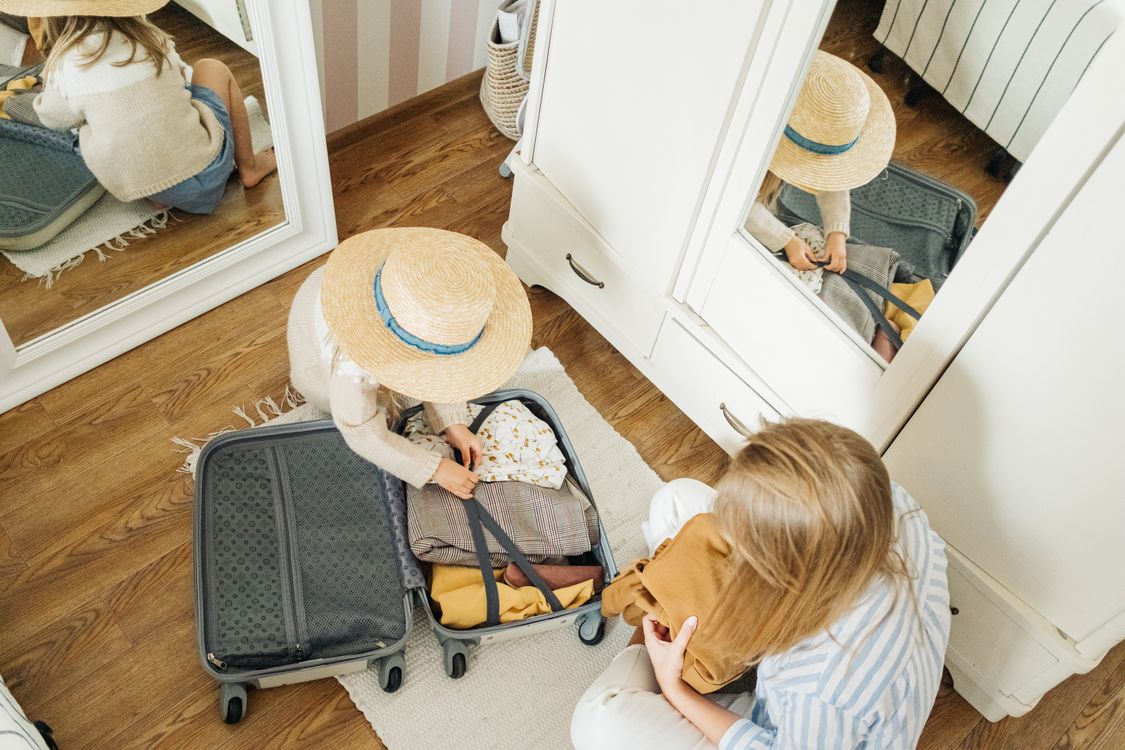
Then divide the first-week clothes across the luggage rather than putting every item for one person in a single case. The aim is not to prepare for every possible loss. It is to avoid making one delayed bag the only source of a child’s clothes or every adult’s clean shirt. A simple packing note can show where the useful items have gone.
Think in combinations. Several tops that work with the same trousers may be more useful than a separate outfit for every imagined occasion. Plan around access to laundry, likely weather and any confirmed appointment. Leave the clothes for hypothetical events until the essentials fit without a struggle.
Give familiar objects a deliberate place
A small familiar object can earn its space even when it has no obvious logistical purpose. A book that is read every evening, a particular soft toy or a few drawing materials may help recreate something recognisable while the room and daily rhythm are different. Let a child help choose from a manageable selection, keeping the size and carrying arrangements clear.
Avoid turning this into a test of what the child loves most. Some belongings can travel later, and some can be photographed or stored. Explain where things will go and when you expect to see them again, without promising an arrival date that has not been confirmed. Put the chosen first-week items where they will be found before the family is tired.
If more than one adult is travelling, show each other the arrangement. A beautifully organised case is less useful when only one person knows that the bedtime book is under the shoes. Label a pouch by its purpose, such as first evening or washing, rather than by the name of the person who happened to pack it.
Leave a little capacity unassigned
It is tempting to solve every unknown by adding one more object. Instead, distinguish a genuine arrival dependency from something you can work out after seeing the new place. You may need the right clothes for a confirmed school visit; you probably do not need every piece of stationery the child might use during the term.
Keep a short list of things to buy or check locally, with the urgent items at the top. That list can wait while you eat, sleep and get your bearings. Before closing the bags, walk through arrival evening and the following morning once more. If those two periods work, the first week has a beginning, even when the rest of the household is still in boxes.